I Mite Have Known
Spring turned to summer quickly in the bee yard this year. The bees multiplied—and so did the queen cells. Before I knew it, the honey supers were on, and mite treatments had been pushed aside.
I wasn’t too worried. I had a plan: test and treat as soon as the honey supers came off. I could have used oxalic acid vapor while the honey supers were on, but at the time, I didn’t think mites were really a problem. I checked capped drone brood and watched for visible signs of mites, but I only spotted one mite in a couple of the hives.
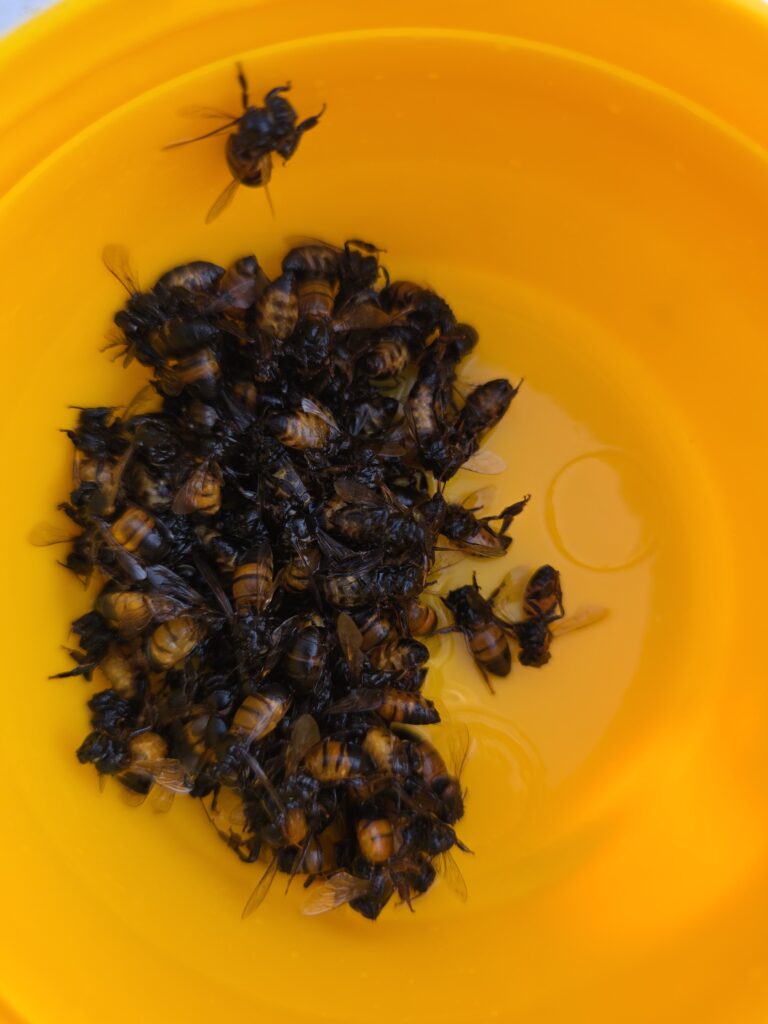
I also skipped the alcohol wash. I didn’t want to sacrifice 300 bees when everything seemed to be going so well, and I was fairly certain I had the mites under control.
Then the honey was harvested, and I noticed a couple of bees with deformed wings.
I knew it was past time for an alcohol wash.
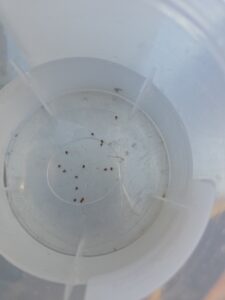
The result: 15 mites in my test cup—roughly a 5% infestation.
That was disappointing. And I mite have known better.
Just because everything looks good on the surface doesn’t mean there isn’t trouble brewing underneath.
With the weather still too hot for Formic Pro, which would have the advantage of reaching mites reproducing beneath capped brood, I started oxalic acid vaporization treatments every five to six days. Oxalic acid is very effective against the phoretic mites riding on adult bees, but it does not reach the mites protected beneath capped brood. That means repeated treatments are necessary while brood is present to catch mites as they emerge.
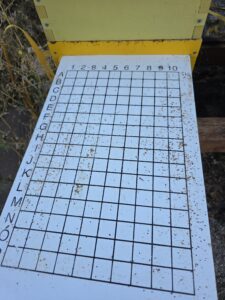
The number of mites dropping onto the bottom boards after those treatments has been eye-opening. There were far more mites in those colonies than I ever would have guessed from looking at the bees.
It was a good reminder that seeing one or two mites—or seeing none at all—isn't the same thing as having a low mite count. By the time mites and deformed wings become easy to see, the colony may already be dealing with a significant infestation.
This year taught me an important lesson: I can't manage what I don't measure. Next year, the alcohol wash won't be something I put off because the bees look healthy. Three hundred bees are difficult to sacrifice, but losing an entire colony to a problem I could have caught earlier would be much harder.
What We Don't See
The lesson reaches beyond the bee yard.
It is easy to look at a hive bustling with bees, storing honey, raising brood, and assume everything is fine. From the outside, mine looked strong and productive. But underneath those capped cells, something I couldn't see was quietly multiplying.
Life can be like that too.
We often judge how things are going by what we can see. The bills are paid. The work gets done. The house is taken care of. We smile, show up, and keep moving forward. From the outside, everything may look perfectly healthy.
But people can carry grief, fear, loneliness, disappointment, exhaustion, or worry that no one else can see. Problems don't become real only when they become visible.
I needed the reminder not only to pay attention to what might be hiding in my own life, but also to extend a little more grace to the people around me. We rarely know everything another person is carrying beneath the surface, but God knows.
And sometimes God is working in places we can't see, too.
“For we walk by faith, not by sight.” — 2 Corinthians 5:7
I couldn't see the mites multiplying beneath the capped brood, but they were there. In the same way, when I can't see what God is doing, it doesn't mean He isn't working.
Some things hidden beneath the surface need our attention. Others require our faith to trust that God is already at work.
Maybe wisdom is learning the difference—and remembering that what we can see is rarely the whole story.