
Winter in the Bee Yard (December-February)
Deep Dormancy → Maximum Conservation → Fragile Late-Winter Expansion
Primary Winter Goals
- Conserve resources
- Preserve honey reserves
- Maintain dry internal climate
- Protect cluster integrity
- Ensure access to stores
- Support safe brood restart
Major Winter Risks
- Starvation inches from honey
- Entrance blockage (snow/dead bees)
- Moisture condensation chilling cluster
- Late winter protein deficit
- Nosema stress
- Premature brood stimulation
- Wind exposure
Winter To-Do
-
Monitor hive weight trajectory
-
Add emergency dry feed when necessary
-
Maintain ventilation and moisture control
-
Clear entrances
-
Protect from wind exposure
-
Order spring queens/packages/nucs
-
Prepare spring equipment
Seasonal Theme: Conservation → Survival → Controlled brood restart
Overall Objective: Maintain cluster integrity, prevent starvation and moisture stress, and support a safe transition toward early brood rearing.
Weather Trends
- December: 23–34°F; snow accumulation; sustained cold
- January: 23–34°F; extended sub-freezing; highest snow totals
- February: 24–40°F; intermittent thaws possible
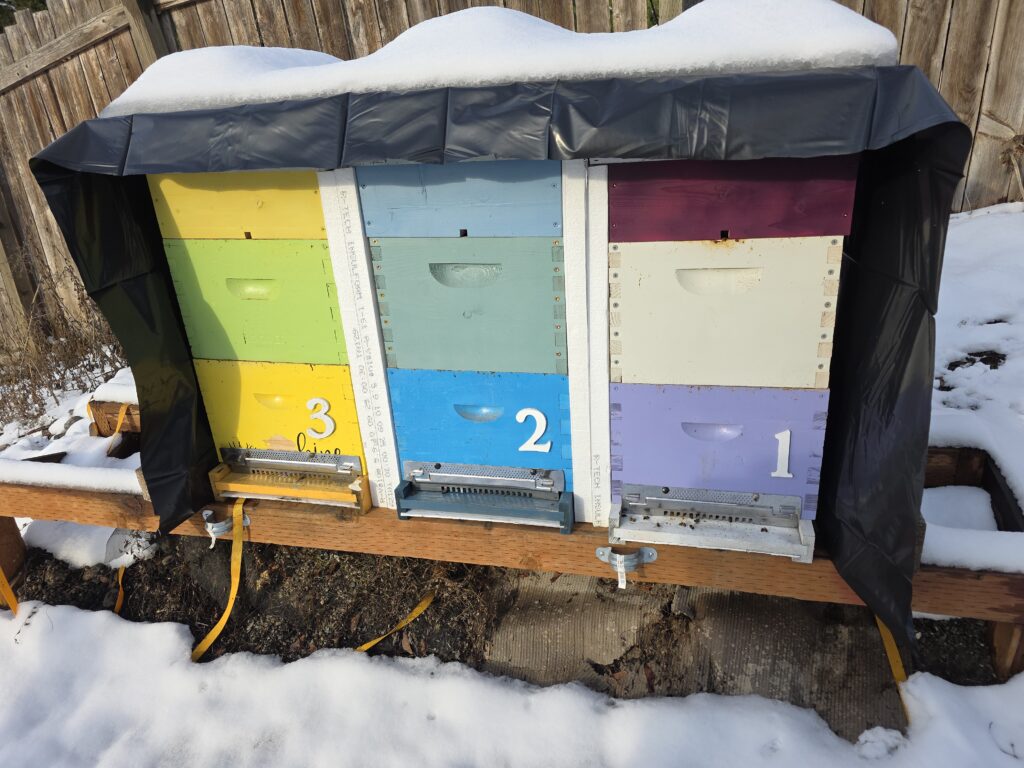
December - Strict Conservation
Bee Mood & Activity
- Low responsiveness
- Highly protective if opened
- No external activity
- Active thermoregulation
Brood Development
- 4–6 frames of bees
- No brood
- Varroa dormant (no brood reproduction)
Inspections/Equipment Management:
- External checks only
- Mouse guards in place
- Entrance reduced
- Clear entrances of snow and dead bees
- Maintain ventilation
- Prevent wind from blasting into entrance
- Heft hives to monitor weight trajectory
- Do not open unless emergency
- Repair/build spring equipment
Food Management:
- No foraging
- Steady honey consumption
- Add dry sugar/fondant if hive feels light
- No liquid feed
Pest & Disease Management
- Varroa dormant phase
- Ideal oxalic timing (broodless)
January - Deep Survival Mode
Bee Mood & Activity
- Deep energy conservation
- Occasional cleansing flights
- Slow cluster migration across stores
- Defensive if disturbed
Brood Development
- Little to no brood (unless unusually mild)
- 4–6 frames of bees
Inspection/Equipment Management
- Heft only; avoid opening
- Mouse guards in place
- Entrance reduced
- Clear entrances of snow and dead bees
- Maintain ventilation
- Prevent wind from blasting into entrance
- Heft hives to monitor weight trajectory
- Do not open unless emergency
- Repair/build spring equipment
Food Management
- Stored honey only
- Add dry sugar/fondant if needed (do not break cluster)
- Avoid liquid syrup
Pest & Disease Management
- Low varroa activity
- Mouse intrusion risk
February - Fragile Biological Reactivation
Bee Mood & Activity
- Cleansing flights on warmer days
- Slightly more reactive
- Internal brood warming begins
- Still defensive and fragile
Brood Development
- Queen resumes light laying late month
- Brood warming increases metabolic demand
- Varroa reproduction resumes when brood appears
- 5–7 frames of bees
Inspection/Equipment Management
- Heft regularly
- brief inspection only if ≥50°F
- Mouse guards in place
- Entrance reduced
- Clear entrances of snow and dead bees
- Maintain ventilation
- Prevent wind from blasting into entrance
- Heft frequently
- Quick peek possible at 50°F
- Do not expand space
Food Management
- Carbohydrate demand increases
- Dry sugar/fondant if light
- Protein patty only if pollen critically low and temps allow brief opening
- Avoid overstimulating brood
- Starvation risk peaks
- Avoid liquid feed
Pest & Disease Management
- Varroa reproduction restarts with brood
- Nosema stress in damp conditions
- Oxalic vapor possible early if broodless
Major Winter Forage in Eastern Washington
December -January
- None

February - (Weather dependent)
-
Maple – pollen
-
Willow – pollen