God's Lessons in the Bee Yard
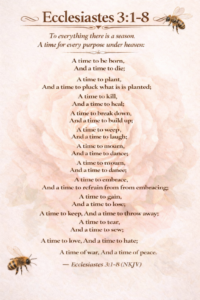
“To everything there is a season,
A time for every purpose under heaven.” — Ecclesiastes 3:1 (NKJV)
From this we learn:
-
God’s timing is purposeful, even when it is not immediately clear.
-
Human understanding is limited, but divine oversight is not.
-
Faith involves trusting the One who orders the seasons.
We may not be able to control or comprehend everything that happens in our lives, but Ecclesiastes reminds us that events unfold “under heaven.” That phrase signals that our experiences occur within God’s greater plan.
To embrace God’s perfect timing, then, is to:
-
Accept that seasons change.
-
Act faithfully in the present season.
-
Trust that the One who appoints times also sustains us through them.
The passage ultimately calls for surrender—not passive resignation, but confident trust that God governs what we cannot.
Ecclesiastes teaches us to embrace God’s perfect timing.
Beekeeping makes that lesson tangible.
A beekeeper quickly learns that the hive does not operate by human preference. It operates by season.
There is a time to build up.
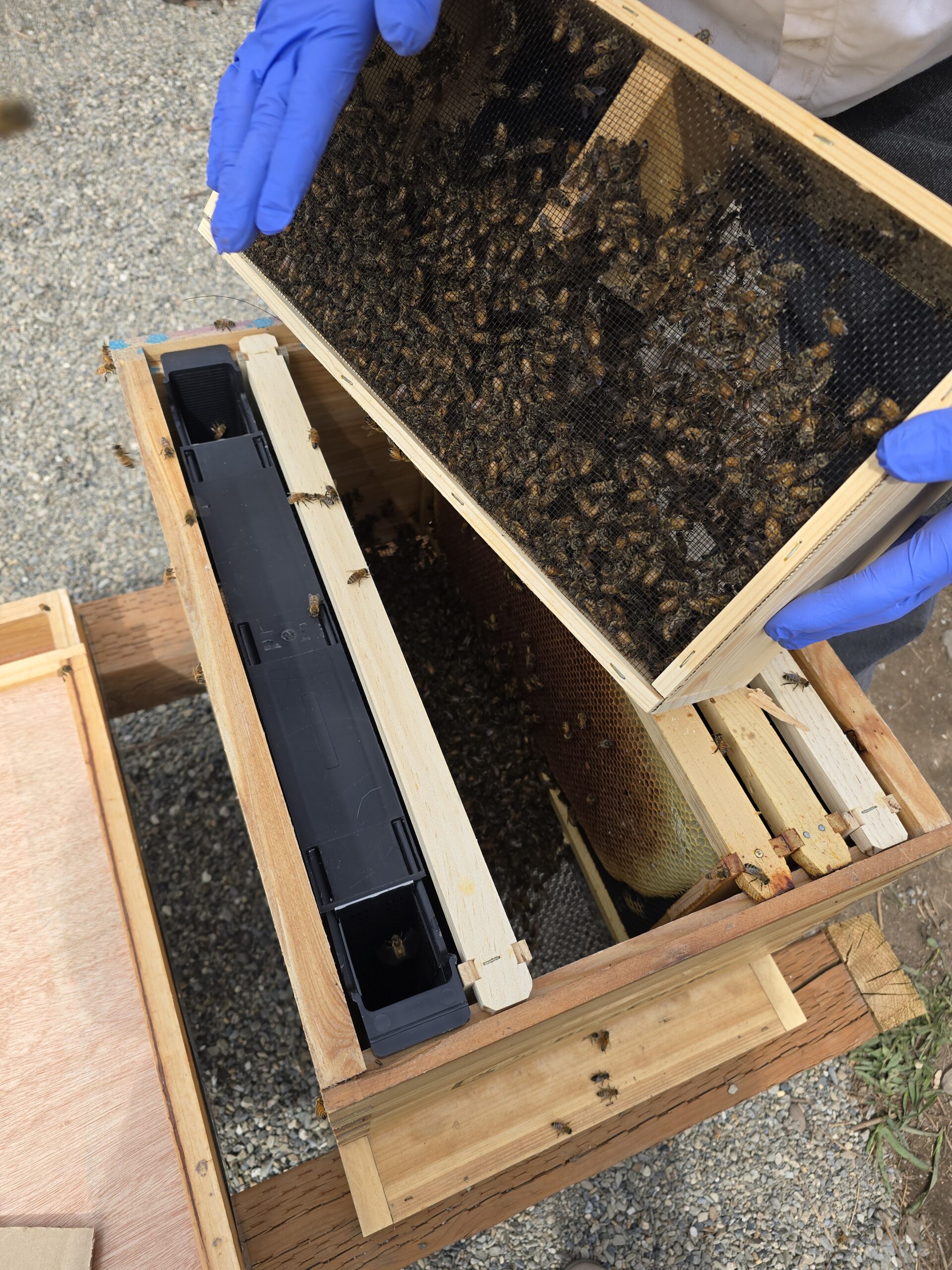
In spring, as daylight lengthens and nectar begins to flow, the queen increases brood production. Frames fill. The colony expands rapidly. This is not forced growth; it is seasonal growth. Attempting to restrain expansion during a strong flow can hinder the colony’s strength.
There is a time to gather.
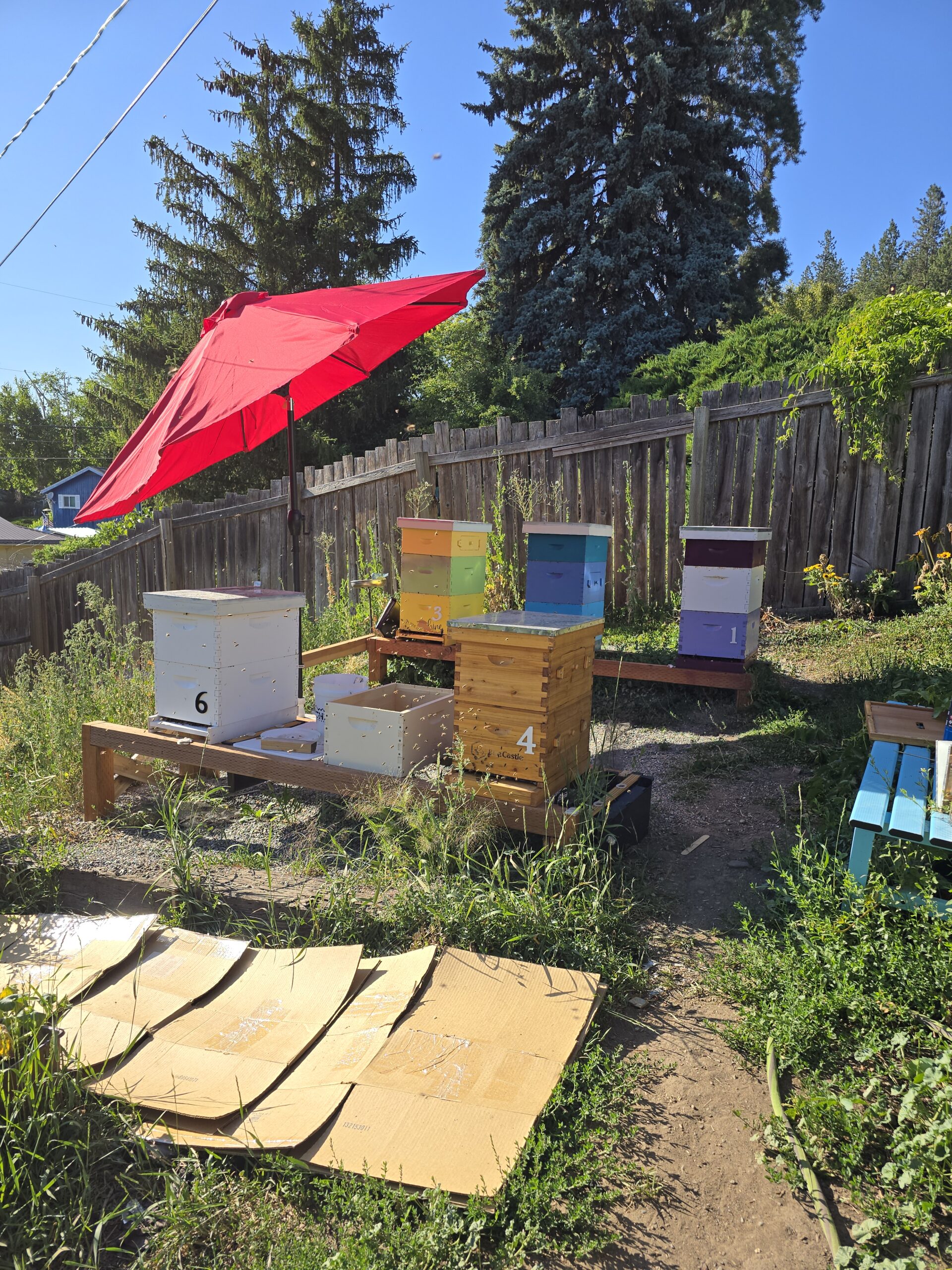
During peak nectar flow, bees work intensely, storing honey in preparation for what is coming. The beekeeper harvests only when frames are properly capped—when the time is right. Extract too early, and the honey ferments. Wait too long, and the opportunity passes.
There is a time to refrain.
During dearth or cold weather, opening the hive can cause more harm than good. Wise beekeepers know when to step back. Intervention is not always the answer; sometimes restraint preserves the colony.
There is a time to keep.
Late summer and fall shift the focus from production to preservation. Honey stores are left for winter survival. The hive consolidates. Brood production slows. What once looked like explosive growth becomes careful conservation.
There is even a time to lose.
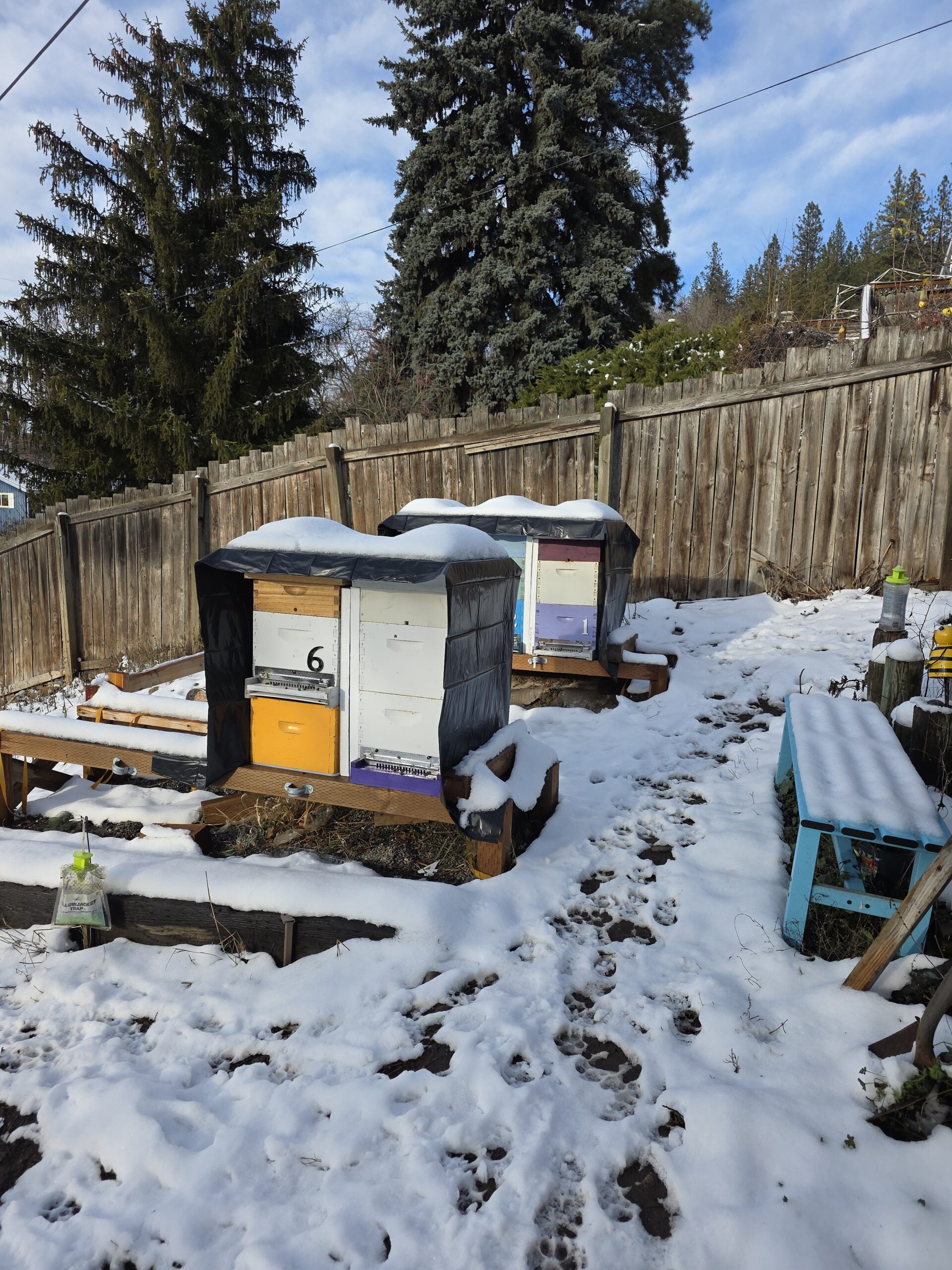
Harsh winters, unexpected disease, or queen failure may result in loss despite careful management. Beekeeping humbles the illusion of control. The keeper provides support—but cannot command weather, nectar flow, or survival.
This is where Ecclesiastes speaks clearly.
We may not control or fully understand each season, but God orders time. The bees respond instinctively to conditions He set in motion—temperature, bloom cycles, daylight patterns. The beekeeper’s role is not to override the season but to discern it.
Beekeeping becomes a lived parable:
-
Growth cannot be rushed.
-
Harvest cannot be forced.
-
Rest cannot be skipped.
-
Winter cannot be avoided.
Each has its appointed time.
Ecclesiastes 3:1–8 reminds us that our lives function the same way. Just as the hive thrives when it moves with the season rather than against it, we flourish when we trust God’s timing instead of resisting it.
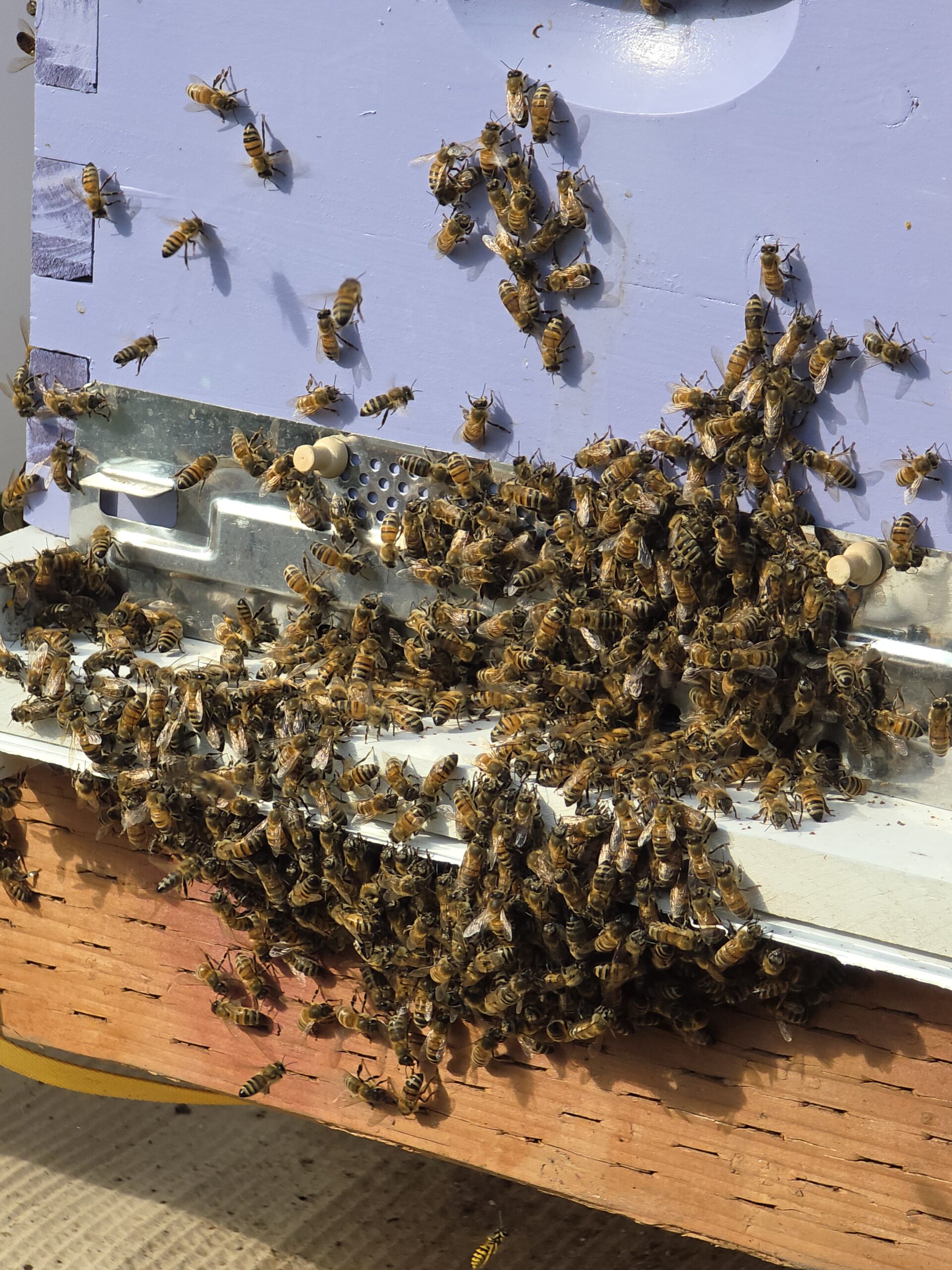
The wise beekeeper watches the entrance, the brood pattern, the nectar flow.
The wise believer watches the season of life and trusts the One who appointed it.